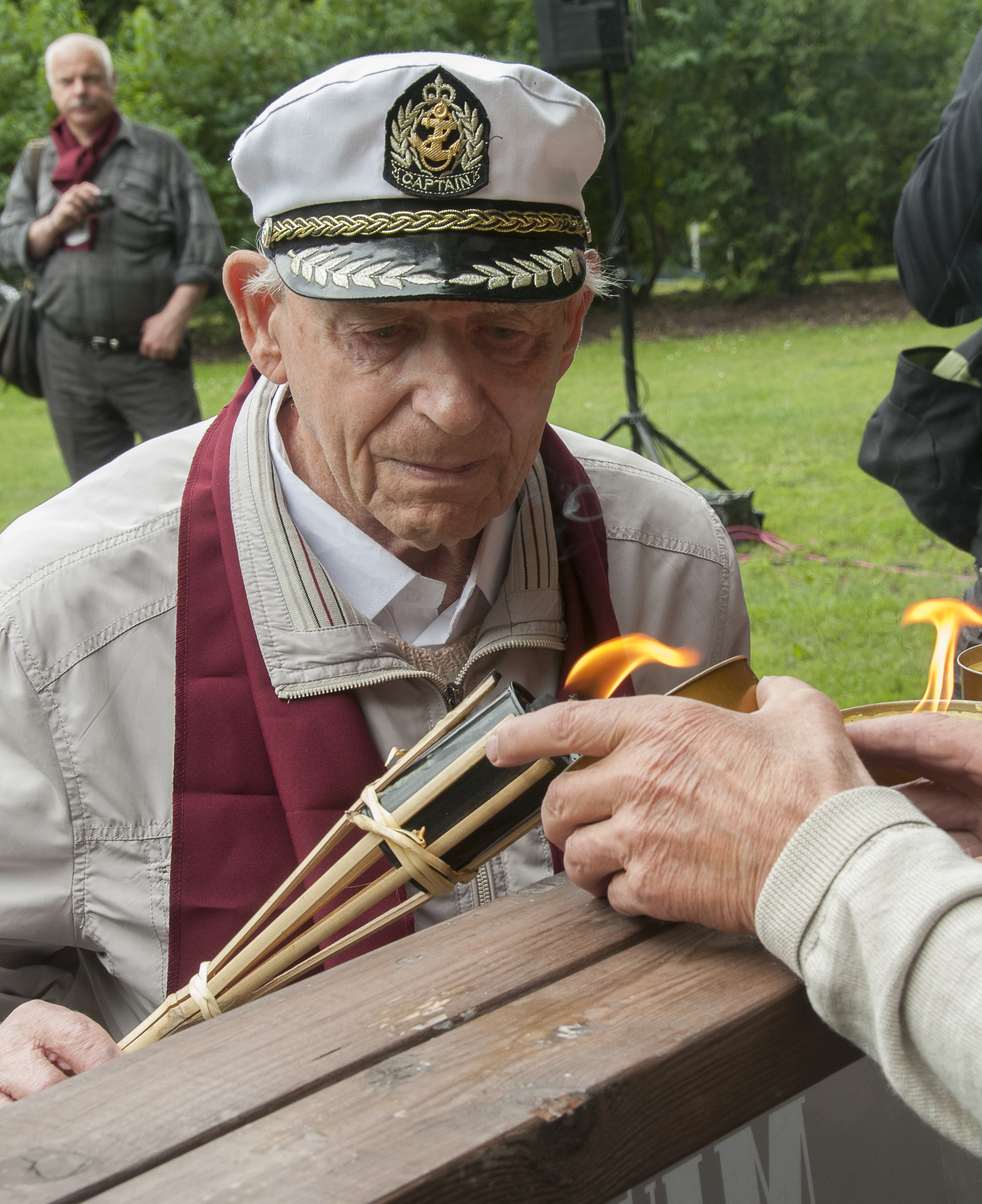
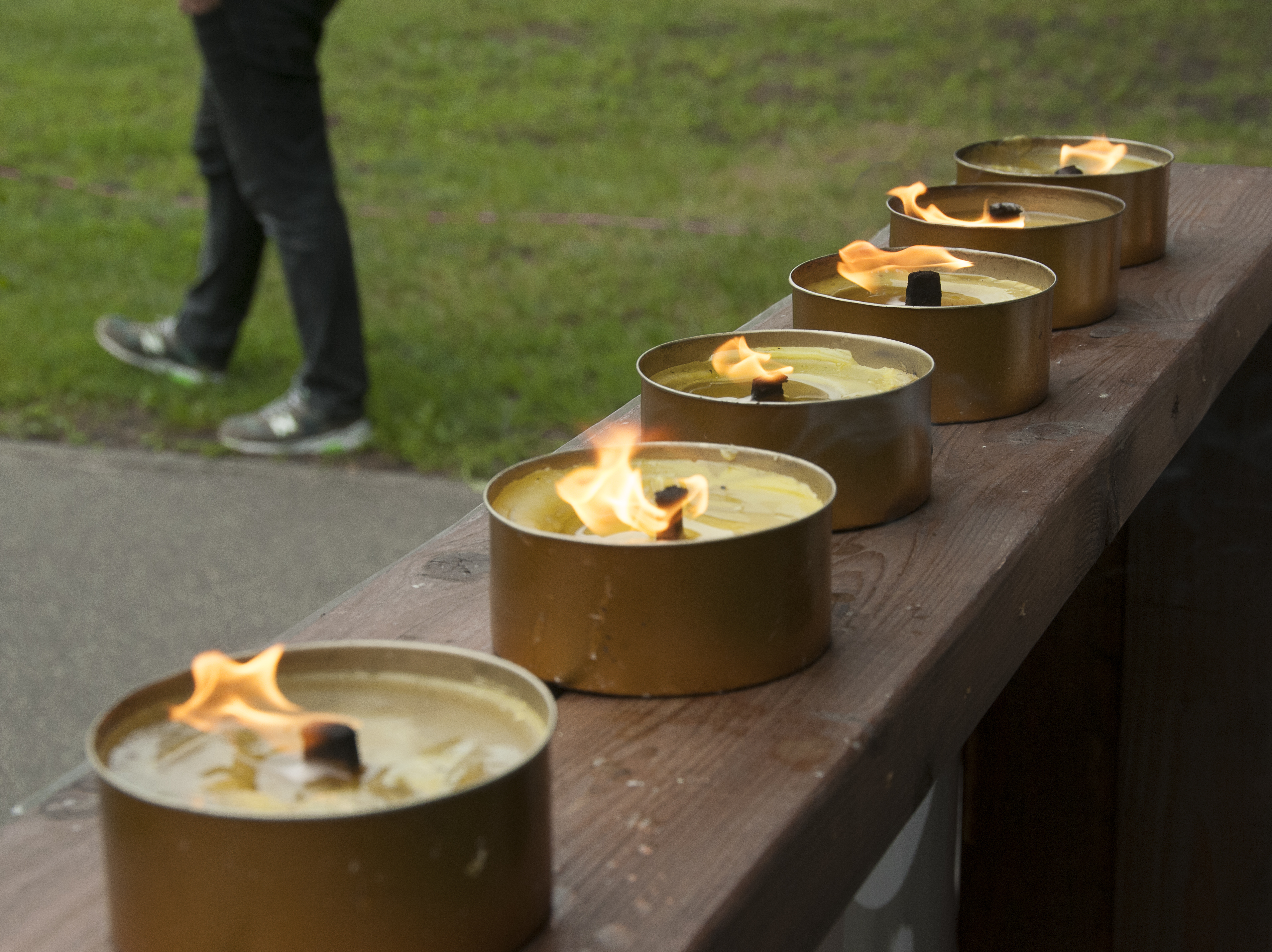
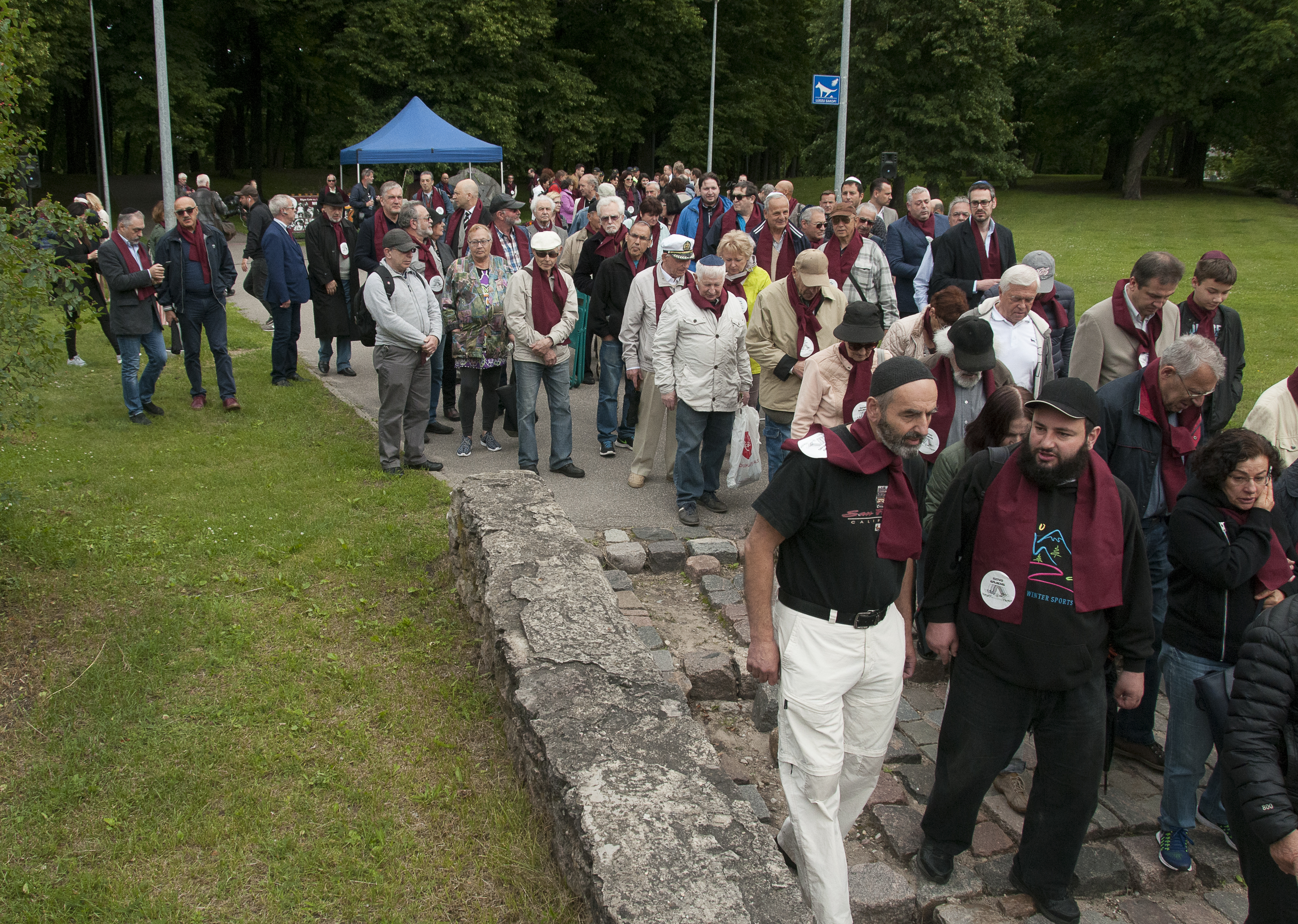
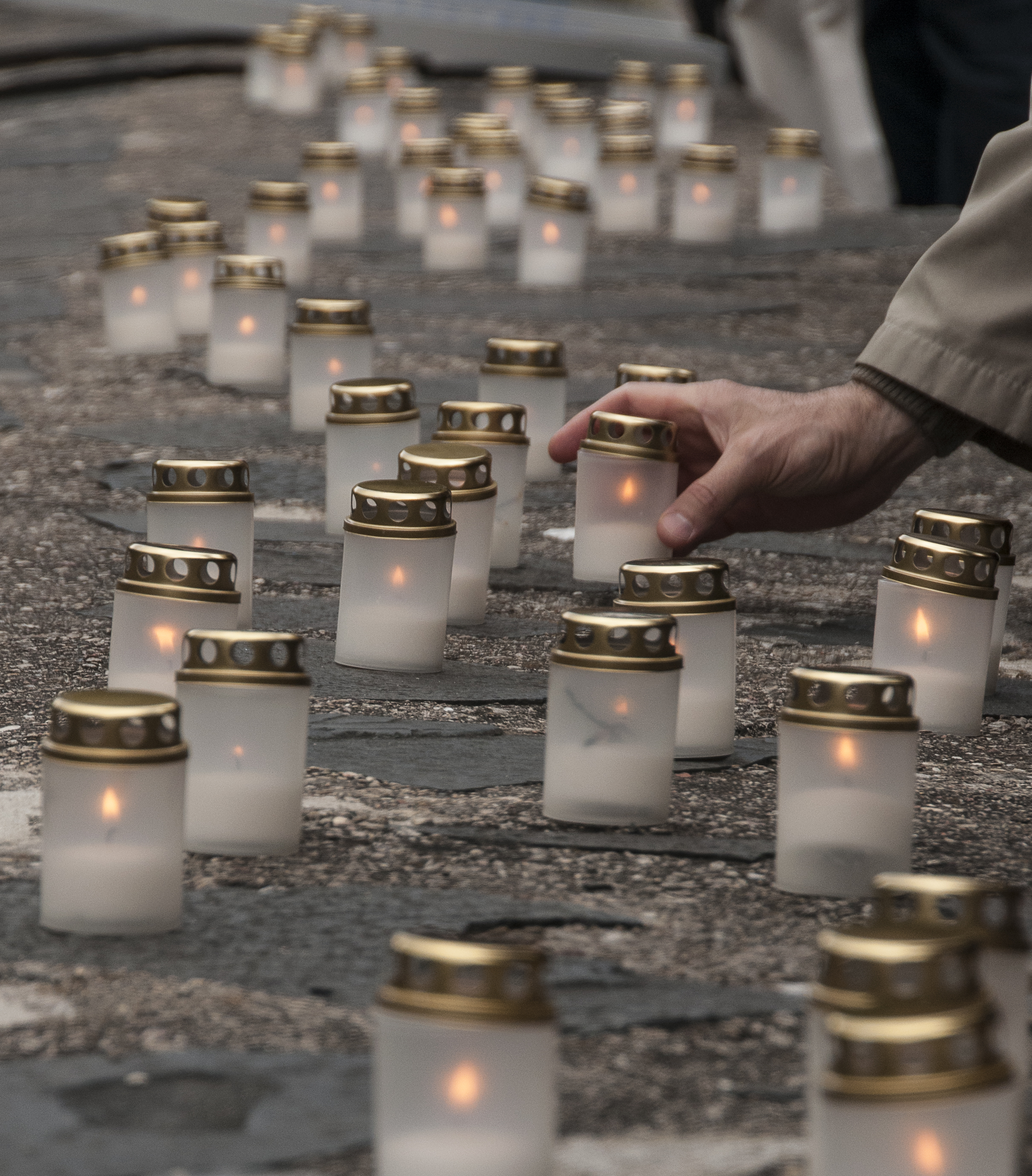
In Riga happened annual commemorative march STEPS OF LIVE. More than 150 people participated in the event. Such special guests as Professor George Schwab, who every year comes to Riga specially for this march, Joseph Dlinz from Russia, who was lucky to survive in the ghetto, Teya Brainina from Germany, who was the only one of her class who could to evacuate, representatives of the third and fourth generations, Entrepreneurs and partners. A memorial pray was performed by the famous cantor Telman Guzhevsky. Then the participants of the event marched quietly along the streets of the former ghetto, which for 76 years didnt change too much. Only the fact is different – that the participants of the march has the right to choose where to go , and those people who were forced to walk along these streets during the Holocaust, had no such choice. The event ended at the Great Choral Synagogue memorial, where the marchers joined the meeting with the the country’s officials persons.
Mrs. Hannah Rosenthal visited the museum on April 19, 2012. Rabbi Menachem Barkahan gave her a guided tour and told about perspectives of the museum as well as answered her questions about the Latvian Jewish community.
Andris Berzinsh was the first President of Latvia who visited Riga Ghetto and Latvian Holocaust museum. He spent there more than an hour, looking around the exposition and wall with names of 76 000 Latvian Jews who faced the Holocaust.
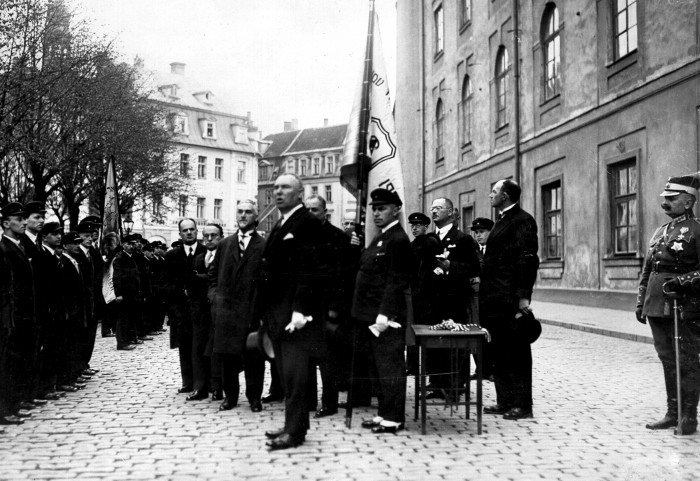
Svinīgās Latvijas Ebreju atbrīvotāju biedrības karoga iesvētīšanas ceremonijas dalīnieki pie Rīgas pils1939. gada 17. maijā;Участники торжественного освящения знамени Общества освободителей Латвии еврейской национальности у Рижского замка 17мая 1939 года;Participants of the blessing of the flag of Society of Jewish Liberators of Latvia at the Riga castle, May 17, 1939
Riga Ghetto and Latvian Holocaust Museum is open. Its exposition is visited by dozens of Latvian and international visitors daily. Simultaneously, there are construction works continued at museum premises at Maskavas str. 14a. More than 700 m3 debris was removed from the 1st and the 2nd stores of further museum premises of 1140 m2. Beams are strengthened and the roof is insulated. Heating, sanitation and water supply systems are being summed up. The renovation of office premises is almost completed.
There are works continued at the territory of in-yard exposition, too. The house of former Riga Ghetto previously located at Maza Kalna str. 21 has been disassembled and moved to the museum; it will be built anew and reconstructed to represent the atmosphere of Riga Ghetto inhuman environment to nowadays visitors of Ghetto museum. Latvian best artists are involved in the design of this particular museum showpiece.
This is to announce that Riga Ghetto Museum exposition is being launched on September 21st, 2010 at Maskavas 14a (entrance from Krasta srteet). More than 70 000 local Jews and nearly 20 000 Jews deported from Western Europe were executed in Latvia in the World War II. Riga Ghetto Museum is located in the historical part of the city near the borders of former ghetto. Riga ghetto territory itself is almost unique in Europe in terms of the absence of any significant architectural changes within past 60 years.
The opening of the first line of exposition should be considered as the first indeed significant step to the further development of Riga Ghetto Museum. There are stands with the names of more than 70 000 Latvian Jews who faced the Holocaust exposed at the museum area, covered by the stones from the streets of Riga Ghetto. The museum has also opened the photo exhibition, dedicated to anti-Semitism propaganda, Holocaust in Latvia, the Resistance and the Righteous Among the Nations.
This is impossible to commemorate the Holocaust without the consideration of the history of Latvian Jewry that counts 450 years. Therefore, a part of the overall exposition is dedicated to the past that was lost by Latvia and worldwide after the Catastrophe.
Riga Ghetto Museum is not just a museum. It will become the significant memento of the dreadful events that occurred in the history of Latvia and should never ever be repeated again. The Museum is becoming a center of culture and education, a source of tolerance and mutual respect.
Vice-major of Riga, ministers and public figures, diplomats and business men took part in the ceremony.
The event, that occurred on the February 2nd, 2010 in the Council of Riga, was important as for the Jews community of Latvia and descendants of Latvian Jews, who live all over the world, as for all others, for whom the memory, history and culture are important – the vice-mayor of Riga Ainars Slesers and Chairman of the Jewish community „Shamir” Rabbi Menachem Barkahan signed a protocol of intentions on foundation of the Riga Ghetto Museum.